
Under-eye fat repositioning
눈밑지방재배치 · Korean term
Under-eye fat repositioning is a lower-eyelid surgery technique. Bulging under-eye fat is moved rather than removed, aiming to smooth the junction between lid and cheek and soften a tear-trough hollow. The technique varies widely between surgeons, the evidence is mostly low-level, and risks include lid position changes, eye-surface swelling, lumpiness and incomplete correction.
On this page
Overview
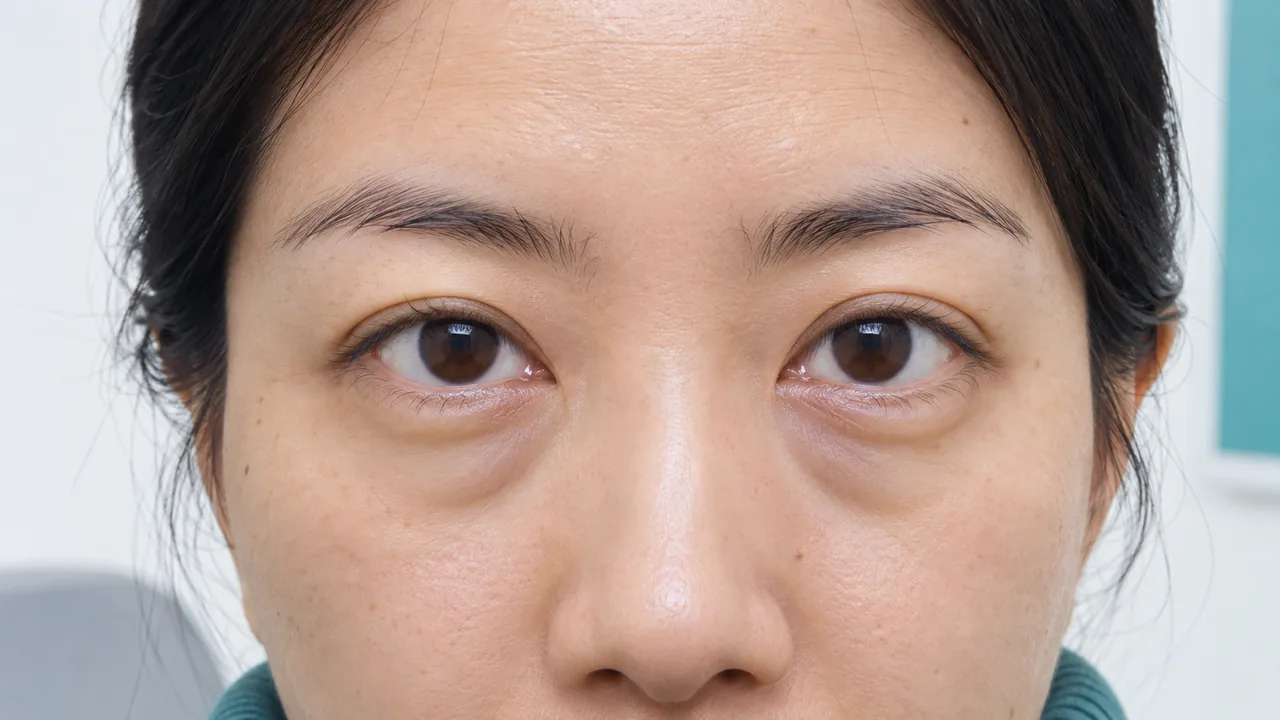
What it is
Under-eye fat repositioning is a technique within lower eyelid surgery (lower blepharoplasty). The NHS notes that in lower-eyelid surgery the surgeon may reposition or remove fat from under-eye bags, and sometimes remove a small amount of skin [1]. A 2025 systematic review describes repositioning as moving bulging orbital fat instead of removing it. The goal is to soften the junction between lid and cheek and reduce a tear-trough hollow [3]. The review presents this as part of a move away from fat removal alone, which the authors say can leave a hollow look over time [3].
What it involves
The fat is usually moved while still attached to its blood supply and secured in a new position. Studies describe many different tissue planes and fixing methods, so "fat repositioning" does not refer to one standard operation [3]. Using fat grafts instead is a separate alternative [3].
- Through the inside of the lid (transconjunctival): avoids a visible scar and suits younger people who do not need skin removed, but gives less working room [3].
- Through the skin below the lashes (transcutaneous): gives more room and allows skin removal or lid support at the same time, but leaves an external scar [3].
The NHS describes eyelid surgery as usually taking about 45 minutes to 2.5 hours, with most people going home the same day [1].
Reasons to discuss it with a clinician and limits
People usually ask about this when under-eye bags with a hollow below them are the concern. The 2025 review found no clear difference between the two approaches in satisfaction or complications. However, inconsistent and low-level reporting makes it hard to identify a best method [3]. The authors also suggest repositioning may not fully blend the lid-cheek junction, and fat grafting may suit some tear-trough corrections better [3].
Two-thirds of the studies in that review involved relatively young Asian patients treated through the inside of the lid. That is relevant background for readers in Korea, but it limits how far the results apply to others [3]. Results are goals discussed with the surgeon, not guaranteed outcomes.
Risks and considerations
- Reported problems after fat-preserving lower-lid surgery include lid malposition or outward turning, mainly after skin or deeper-layer work. Other reported problems are eye-surface swelling (chemosis), prolonged swelling or bruising, firmness or lumps, residual bags or hollows, dry eye and numbness [3].
- A Cambridge NHS trust leaflet notes that chemosis is typically associated with lower-lid surgery and can last weeks or months [2].
- The NHS lists common temporary effects such as puffy, numb lids that are hard to close, watery eyes and bruising. Occasional effects are blurred or double vision and uneven eyes. Rare serious effects include eye muscle injury, the lower lid turning outward, bleeding into the eye socket and vision impairment [1].
- Severe bleeding behind the eye is described as rare but can threaten vision if not treated quickly [2].
Most of this evidence is low-level, and complication reporting is inconsistent, so individual risk should be discussed with the surgeon [3].
Recovery and follow-up
- For eyelid surgery generally, the NHS describes about two weeks off work depending on the job, and bruising and redness that can take several weeks to fade [1].
- During early healing the NHS advises avoiding strenuous activity and swimming for a few days, and avoiding smoking, contact lenses and eye rubbing [1].
- The Cambridge leaflet describes stitches usually being removed about a week after surgery and bruising usually settling within about two weeks [2].
These timelines come from general eyelid surgery guidance, not from fat repositioning specifically. Chemosis can prolong recovery, and healing varies from person to person.
Questions to ask
- Are my under-eye bags and hollow suited to repositioning, removal, fat grafting or no surgery?
- Which approach would you use, inside the lid or through the skin, and what scar should I expect?
- How is the fat secured, and what happens if lumps or residual bags appear?
- How would lid malposition or long-lasting chemosis be managed?
- What follow-up should I expect, and what should I report urgently?
Educational information. AI editorial and source checking are not clinical review. Checked 16 Nov 2026.
- Category
- Facial
- General estimate
- Not availableNo reviewed estimate exists. Clinic prices, when published, appear on each clinic profile.
Doctors who list under-eye fat repositioning
No doctors documented for this procedure yet.
A doctor appears here only when their scope is documented for this procedure at an exact clinic location.
Clinics that list under-eye fat repositioning
Offering evidence from each clinic’s own website. Availability and suitability need confirmation with the clinic.
No clinics list it yet.
Sources
Clinical references
- Eyelid surgery - NHS · NHS (England) · Checked 16 Nov 2026
- Blepharoplasty (patient information) · Cambridge University Hospitals NHS Foundation Trust · Checked 16 Nov 2026
- Transconjunctival or Transcutaneous Approach for Fat-preserving Lower Lid Blepharoplasty? · Plastic and Reconstructive Surgery Global Open, 2025;13(12):e7345 (Atiyeh B et al.) · Checked 16 Nov 2026
- Catalogue source
- Source
This page is for research. It is not medical advice and is not a recommendation. Whether a treatment suits you, its risks and its cost need an individual consultation with a licensed doctor.
Online correction reports are not open yet.