
Revision eyelid surgery
눈재수술 · Korean term
Revision eyelid surgery is a further operation after an earlier eyelid procedure, usually blepharoplasty, when the first result is thought to need correction. It describes why and when surgery is done rather than one fixed technique. The sources reviewed cover first-time eyelid surgery, so the risk and recovery information here is general and not specific to revision.
On this page
Overview
What it is
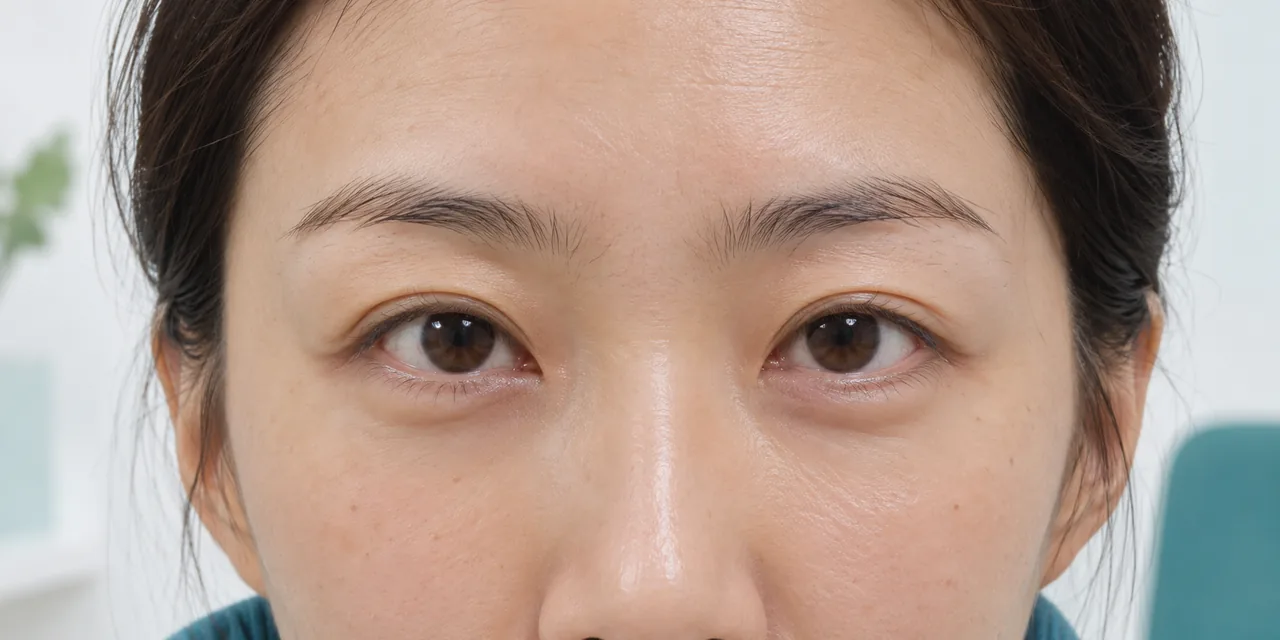
Revision eyelid surgery is a further operation on the eyelids after an earlier eyelid procedure, most often blepharoplasty. Blepharoplasty removes loose skin and extra fat, usually through small incisions in the natural eyelid creases [1]. The word "revision" describes the reason for the operation, which is to correct or adjust an earlier result. It is not a single named technique, and the sources reviewed do not give a standard definition.
The NHS eyelid surgery page notes that some people feel the result they wanted was not achieved and that they need another operation, although this is uncommon [2].
What it involves
The sources reviewed describe first-time eyelid surgery, not a standard revision method, so this guide does not describe how a revision is done. What a revision involves depends on what the first operation changed and on the problem now being addressed. Eyelid surgery in general is done under local or general anaesthetic, and most people go home the same day [2].
Earlier non-surgical treatments can also matter. A 2025 systematic review of five small studies looked at hyaluronic acid filler used after blepharoplasty. It noted that filler injected later sometimes caused slight distortion during a later revision operation [4]. For that reason, the surgeon needs to know about any past fillers or other eyelid treatments.
Reasons to discuss it with a clinician and limits
- A review of blepharoplasty complications describes late effects such as changes in eyelid height and contour, asymmetry, scarring and lasting swelling. These are the kinds of concerns that may lead someone to ask about revision [3].
- The same review groups problems by when they appear. These range from early problems such as corneal scratches or bleeding behind the eye, to problems in the first weeks such as lid position changes, eye misalignment, corneal exposure and excess tearing [3]. Some swelling is temporary [1], so the operating team should decide whether a change has settled before planning more surgery.
- Health factors that raise the risk of eyelid surgery include diabetes, dry eye or low tear production, heart or blood vessel disease, high blood pressure and thyroid problems [1].
- Limit: the retrieved sources give no revision-specific technique, outcome or complication data.
Risks and considerations
Eyelid surgery carries general surgical risks, including bleeding, blood clots, infection and reactions to medicines or anaesthetic [1] [2]. Eyelid-specific risks include dry eyes, temporary swelling, double or blurred vision, difficulty closing the eyes during sleep, slow or uneven healing, scarring and eyelids that do not match [1]. Rare but serious problems listed by the NHS include eye muscle injury, the lower lid turning outward, bleeding into the eye socket and vision impairment [2].
According to the review, careful assessment before surgery can prevent some complications, and technique and management also matter [3]. The retrieved sources do not say whether risks are higher or different for a second operation, so this is worth asking about directly.
Recovery and follow-up
For first-time eyelid lift surgery, MedlinePlus describes bruising lasting about 2 to 4 weeks and vision usually clearing within 2 to 3 days. It also advises avoiding contact lenses for at least 2 weeks and strenuous activity for about 3 weeks [1]. The NHS describes about two weeks off work depending on the job, and says scars may feel tight for a few months [2]. Scars may stay slightly pink for six months or more before fading [1].
These timings come from first-time surgery and have not been confirmed for revision, and healing varies from person to person. The treating team should give the recovery and follow-up plan.
Questions to ask
- What exactly is the concern after the first operation, and how has it been assessed?
- Has the result settled enough to judge, or is waiting longer advisable?
- Which aspects could a revision change, and which may not change?
- How do my previous operation, any fillers and my health factors (for example dry eye or thyroid disease) affect the risks?
- What recovery and follow-up should I expect after a second operation?
Educational information. AI editorial and source checking are not clinical review. Checked 16 Nov 2026.
- Category
- Facial
- General estimate
- Not availableNo reviewed estimate exists. Clinic prices, when published, appear on each clinic profile.
Doctors who list revision eyelid surgery
No doctors documented for this procedure yet.
A doctor appears here only when their scope is documented for this procedure at an exact clinic location.
Clinics that list revision eyelid surgery
Offering evidence from each clinic’s own website. Availability and suitability need confirmation with the clinic.
No clinics list it yet.
Sources
Clinical references
- Eyelid lift: MedlinePlus Medical Encyclopedia · U.S. National Library of Medicine (MedlinePlus; content by A.D.A.M.) · Checked 16 Nov 2026
- Eyelid surgery - NHS · NHS (England) · Checked 16 Nov 2026
- Blepharoplasty complications (Lelli GJ, Lisman RD) · Plastic and Reconstructive Surgery, 2010;125(3):1007-1017 (Europe PMC record, PMID 20195127) · Checked 16 Nov 2026
- Role of Hyaluronic Acid in Post-Blepharoplasty Volume Restoration and Complication Management: A Systematic Review · Journal of Clinical Medicine (MDPI), 2025;14(13):4572 (Europe PMC record) · Checked 16 Nov 2026
- Catalogue source
- Source
This page is for research. It is not medical advice and is not a recommendation. Whether a treatment suits you, its risks and its cost need an individual consultation with a licensed doctor.
Online correction reports are not open yet.